



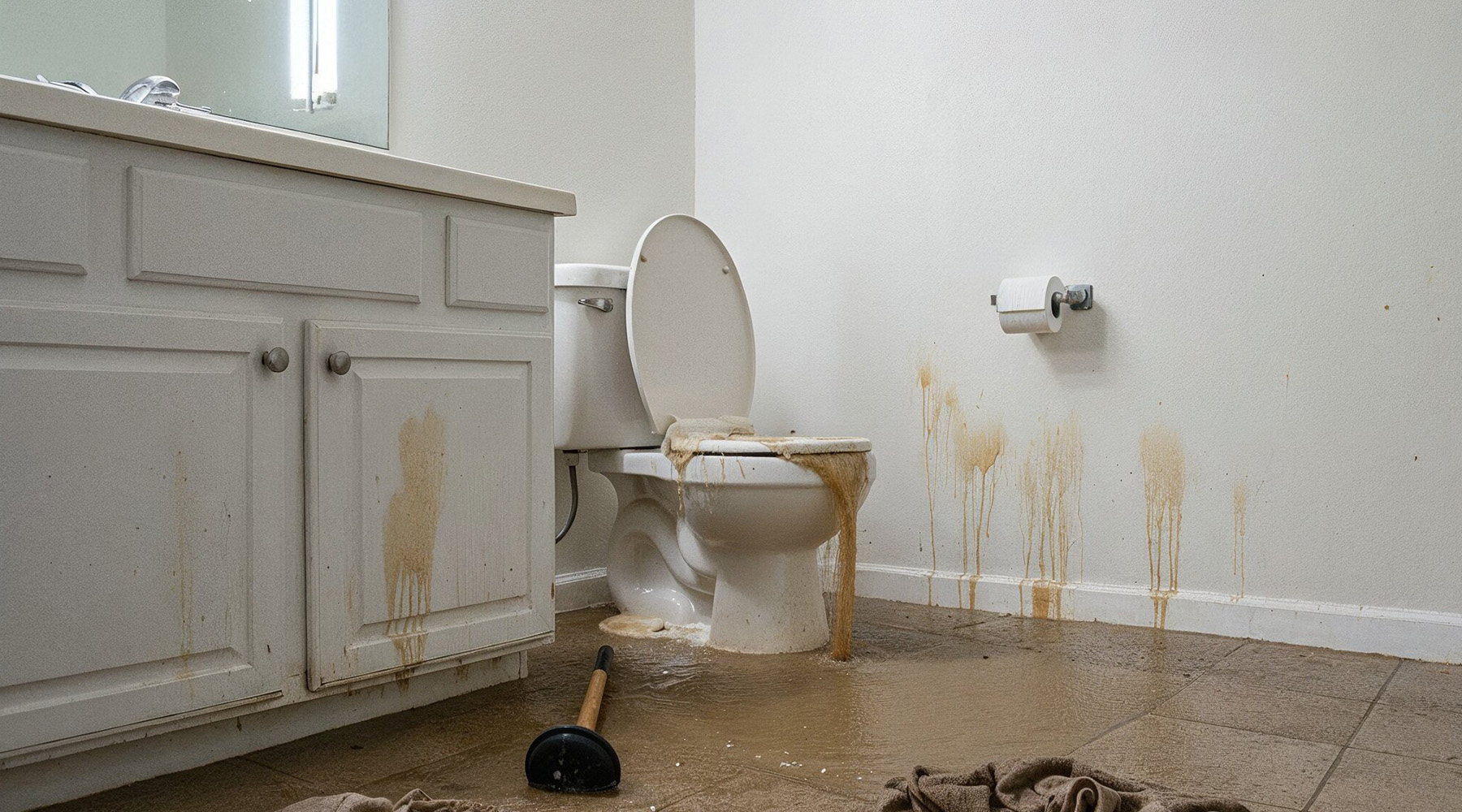
Your sewer line doesn’t just fail overnight without warning. Problems develop gradually, giving you plenty of signs something’s wrong before you end up with raw sewage backing up into your house. The trick is recognizing those signs early and doing something about them.
Here are the red flags that mean you need to schedule sewer inspection and probably repairs sooner rather than later.
Multiple drains backing up at the same time
One slow drain might be a local clog in that fixture. But when your toilet, shower, and sink all back up together, you’ve got a main sewer line problem. Water’s trying to leave your house and can’t get through the main line, so it backs up wherever it finds an opening.

This usually starts subtly. You might notice the shower drains slowly while the toilet gurgles. Within days or weeks, multiple fixtures stop draining completely. Don’t wait for it to get that bad before investigating what’s causing the blockage in your main line.
We got called to a house in Oro Valley where every drain in the home backed up simultaneously. Turned out tree roots had completely blocked their main sewer line about 30 feet from the house. If they’d acted when drains first slowed down, we could’ve cleared the roots before they caused a complete blockage.
The pattern matters too. If lower-level fixtures back up first, the blockage is downstream toward the street. If upper and lower levels back up together, you might be dealing with complete sewer line failure or a blockage very close to where your line exits the house.
Persistent sewage smells inside or outside
Sewage odors mean waste is escaping somewhere it shouldn’t. Inside your house, it might be a dry P-trap or vent issue. But strong sewage smells in your yard, especially near your sewer line path, indicate leaks underground that need immediate attention.
Desert soil doesn’t hide smells well. If you’ve got a crack or break in your sewer line, you’ll smell it. The odor usually gets stronger after using water, when fresh sewage flows through the damaged section and some escapes into surrounding soil.
Don’t convince yourself the smell will go away on its own. Sewage leaks don’t fix themselves – they get worse. That small crack spreading sewage odor today becomes a major break requiring emergency excavation and repair tomorrow if you ignore it long enough.
Check around your cleanout access points too. Odors near cleanouts might indicate failing seals or damage right at those connection points. Either way, sewage smells deserve investigation before you’re dealing with contaminated soil and health department involvement.
Unusually green or lush patches in your yard
That one section of your desert landscaping that’s suddenly thriving compared to everything around it might be getting fertilized by your leaking sewer line. Sewage contains nutrients that promote plant growth, so leaks often show up as unusually green grass or healthy vegetation in an otherwise brown yard.

Look for patterns. If the green patch forms a line from your house toward the street, it’s probably following your underground sewer line. Multiple green spots along that path suggest multiple leak points that need repair before they worsen.
We inspected a property in Marana where the homeowner joked about his “magic grass” that stayed green all summer without irrigation. Camera inspection revealed significant leaks along his entire sewer line. That “magic” was sewage fertilizing his yard, and the repairs weren’t cheap once the whole line needed replacement.
Don’t confuse this with deliberately irrigated areas or sprinkler overspray. Sewer leak greening appears in areas that don’t get watered, grows progressively over time, and often comes with subtle sewage odors if you pay attention to what your nose is telling you.
Gurgling sounds from drains and toilets
Drains and toilets shouldn’t make noise when you’re not using them. Gurgling indicates air trapped in your sewer line, usually because a blockage downstream is preventing normal venting. The air has to go somewhere, so it bubbles back up through your fixtures.

You might hear gurgling in your toilet when you run the washing machine. Or your sink might burble when someone flushes upstairs. These cross-fixture noises mean your main sewer line isn’t flowing freely, and whatever’s blocking it is getting progressively worse.
This symptom rarely appears alone. Usually you’ll notice gurgling combined with slow drains or occasional backups. The gurgling is your sewer line’s way of screaming for help before things escalate to complete blockage and sewage backing into your living space.
Early action when gurgling starts can prevent major repairs. A blockage causing noise today might clear with hydro-jetting. That same blockage ignored for months can become so severe it collapses a section of pipe, turning a simple cleaning into a major excavation and repair project.
Water backing up in unexpected places
Flush your toilet and water backs up in your shower? Run your washing machine and the basement sink overflows? This cross-contamination between fixtures means your main sewer line has a blockage, and water is taking the path of least resistance back into your house.

Lower fixtures back up first because water follows gravity. If sewage appears in floor drains, basement fixtures, or the lowest toilet in your house when you use upper-level plumbing, your main line is definitely blocked or severely restricted downstream.
This gets dangerous fast. Sewage backing into your house creates health hazards and can damage flooring, drywall, and anything else it contacts. Once you’re seeing water where it shouldn’t be, you’re in emergency territory and need professional help immediately.
I remember a call from a family in Sahuarita who ignored slow drains for weeks. One evening their washing machine’s drain cycle caused sewage to erupt from their basement floor drain. Emergency cleanup and repairs cost them over $8,000 when addressing the slow drains immediately would’ve cost a fraction of that.
Foundation cracks or settling
Your foundation and sewer line affect each other. Leaking sewage erodes soil under your foundation, causing settling and cracks. Conversely, foundation movement can crack or offset sewer pipes. If you’ve noticed new foundation cracks, sewer problems could be the culprit.

Pay attention to cracks that appear suddenly or worsen rapidly. Gradual settling over decades is one thing. Cracks appearing over months along with damp soil near your foundation suggest active water or sewage leaks undermining your home’s structural support.
We found this connection at a house in Green Valley where the homeowner called about doors that suddenly wouldn’t close properly. Foundation inspection showed settling on one corner. Our sewer camera revealed a major leak had been washing soil out from under that section for months, creating a void that let the foundation sink.
Don’t assume foundation issues and sewer problems are unrelated. Inspect your sewer line when foundation issues develop, and check your foundation if you discover sewer leaks. Fixing one without addressing the other might leave you with ongoing problems and escalating damage to both systems.
Slow drains throughout the house
One slow drain is probably that fixture’s P-trap or branch line. But when every drain in your house gradually slows down over weeks or months, your main sewer line is developing a blockage that’s restricting flow increasingly as it worsens.

This pattern often indicates tree root intrusion. Roots start small, penetrating through joints or tiny cracks. They grow inside your pipe, creating progressively worse blockages that restrict drainage more over time until you’re dealing with complete backups and sewage overflow.
Chemical drain cleaners won’t fix this. They might help temporarily with grease or soap buildup, but they can’t remove tree roots or repair structural damage causing your whole system to drain slowly. You need inspection to identify what’s causing widespread slow drainage and proper repairs to fix it.
A couple on Stone Avenue called us after every drain in their 1970s home started draining sluggishly. Camera inspection revealed their clay sewer line was completely infiltrated by mesquite roots over about 50 feet. We replaced that section, and their drains worked like new immediately instead of continuing to worsen.
Soggy areas in your yard
Wet spots in your desert landscaping that stay damp even during dry weather indicate water escaping underground. If those wet areas smell like sewage or are located near your sewer line path, you’ve probably got leaks that need repair before they worsen.
Arizona’s dry climate means wet spots are obvious. Your yard shouldn’t have puddles or consistently damp areas unless you’re deliberately irrigating there. Mysterious wet zones, especially ones that appear or worsen after you use plumbing, almost always indicate underground leaks.

Check these areas after monsoons too. Sometimes leaking sewer lines only become obvious during heavy rains when saturated ground can’t absorb additional moisture from leaking pipes. That wet spot that appears during storms might be there constantly, just hidden by dry soil conditions the rest of the year.
We inspected a property in Picture Rocks where the owner noticed one wet patch near their septic line that never dried out. Camera inspection revealed the pipe had separated at a joint, leaking constantly. Left unfixed, that leak would’ve contaminated soil, killed vegetation, and potentially affected their well water quality.
Frequent clogs requiring professional service
Calling a plumber every few months for the same clog that keeps returning is expensive and frustrating. If snaking or jetting clears your line temporarily but blockages return within weeks or months, you’ve got an underlying structural problem that needs permanent repair.

Tree roots are the usual suspects here. We clear them, they grow back, you call us again. Without addressing why roots can access your pipe (cracks, separated joints, deteriorating pipe material), the cycle continues indefinitely until you finally repair the damaged sections.
Recurring clogs cost way more long-term than proper repairs would. Think about it – if you’re paying for professional drain cleaning three times a year at a few hundred dollars per visit, you’re spending more on temporary fixes than you would on permanent repairs that stop the problem completely.
A Marana homeowner had called different plumbers for clogs seven times in two years before contacting us. Every company just cleared the blockage and left. Our camera inspection showed massive root intrusion through cracked sections. We repaired those sections, and their clog problems ended permanently instead of continuing the expensive cycle.
Your home is over 30 years old with original plumbing
Age alone isn’t necessarily a problem, but original sewer lines in homes from the 1990s or earlier are reaching the end of their service life. Clay pipes, early PVC, Orangeburg, or cast iron all deteriorate over time and commonly fail between 30 and 50 years after installation.
You might not have symptoms yet, but inspection shows what’s developing before problems become emergencies. Proactive inspection and planned repairs cost way less than emergency service when your aging line finally fails completely during a holiday weekend while your house is full of guests.
Tucson’s soil conditions accelerate deterioration too. Expansive clay soil, rocky caliche, ground settling – all these stress underground pipes over decades. Lines that might last 60 years in stable soil elsewhere might only make it 40 years in Arizona’s challenging conditions.
What to do when you notice these signs
First, stop ignoring symptoms hoping they’ll improve. Sewer problems don’t fix themselves – they escalate until you’re facing emergency repairs at premium prices instead of scheduled maintenance you can plan and budget for properly.

Get camera inspection before committing to expensive repairs. Companies that recommend complete sewer replacement without showing you inspection footage proving you need it might be overselling you. Learn what a sewer inspection costs to understand why it’s a smart investment before major repairs. Demand to see what’s actually wrong before opening your wallet for major work.
Act before you’re in emergency mode. If you’re noticing warning signs but haven’t had complete backups yet, schedule inspection and repairs during regular business hours at standard pricing. Wait for the emergency, and you’ll pay premium rates while dealing with sewage backing into your house.
Don’t try DIY repairs on sewer lines. You might successfully clear a clog, but you can’t repair collapsed pipes or remove tree roots that have infiltrated through cracks. Professional inspection and repair prevents making problems worse through well-intentioned but ultimately ineffective DIY attempts.
Prevention beats emergency repairs every time
Watch for warning signs and act on them early – the benefits of maintaining a healthy sewer system go far beyond avoiding emergencies, including protecting your home’s value, your family’s health, and your peace of mind. The difference between a $2,000 spot repair and a $15,000 emergency replacement often comes down to whether you addressed problems when symptoms first appeared or waited until complete failure forced your hand.

Regular inspection catches problems before symptoms develop. Routine camera inspection every few years on older homes finds deterioration before it causes backups, giving you time to plan and budget for repairs instead of scrambling during emergencies.
Ready to address warning signs?
If you’ve noticed any of these symptoms, don’t wait for them to get worse. We’ll inspect your sewer line thoroughly, show you exactly what’s wrong, and explain your repair options clearly without pressure or unnecessary recommendations.
Call Al Coronado Plumbing at (520) 412-8216 or schedule online. Whether you’re dealing with obvious problems or just want to verify everything’s okay, we’ll give you honest answers about your sewer line’s condition and what it needs.